NEP 2020 at Six: What Has Changed in Indian Education?

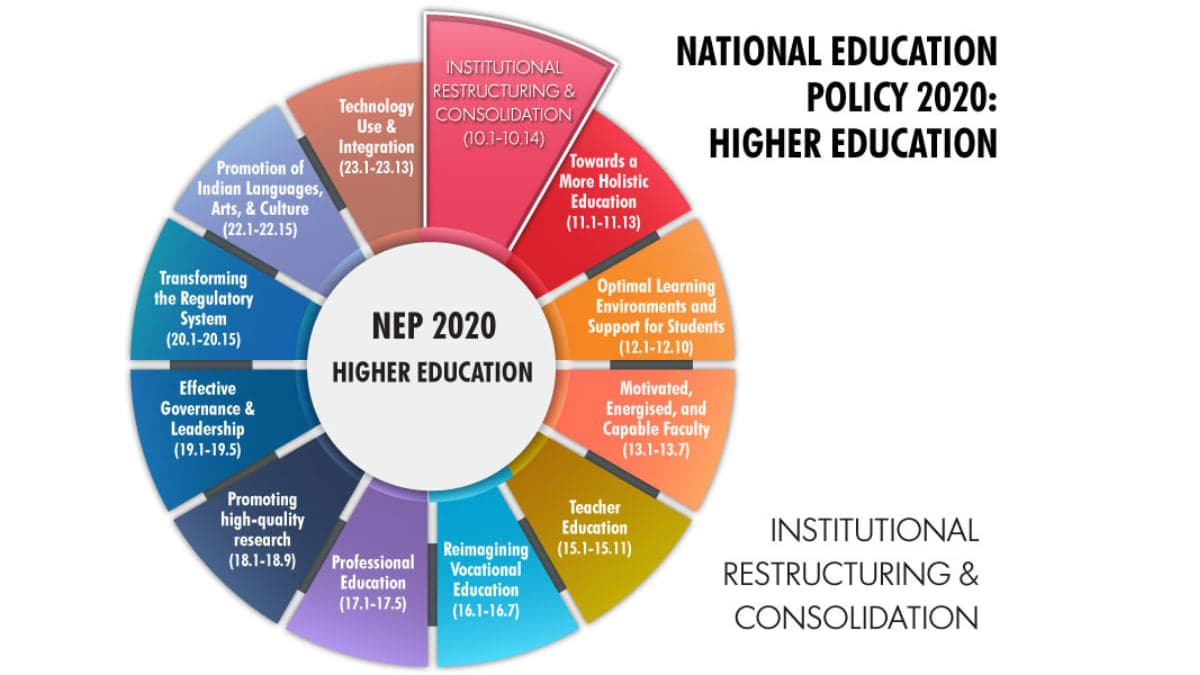
NEP 2020 at Six: What Has Changed in Indian Education? is no longer a distant policy question. It is becoming part of the way Indian students, parents and education institutions make decisions. For EduNex, the important question is not simply whether the trend is growing, but what the evidence says about its impact on learning, opportunity, employability and institutional quality.
The primary issue is NEP 2020. Related questions around education policy, Indian education reforms make this a wider education story rather than a single news event. The latest evidence provides a useful starting point: NEP 2020 was approved on 29 July 2020. Six years later, its implementation is visible in four-year undergraduate programmes, academic-credit mobility, curriculum reforms, CUET and digital academic records, although implementation remains uneven.
The change matters because Indian education is operating at enormous scale. Institutions differ sharply in resources, geography, student profile and academic mission. A policy or technology that works well in a well-funded metropolitan institution may need a very different implementation model elsewhere. That is why national headlines should be followed by institution-level evidence.
For students, the first lesson is to separate opportunity from marketing. A new programme, technology or institutional partnership can create value, but students should ask practical questions: What exactly is being offered? Who recognises it? What will I learn? What will it cost? What evidence exists about outcomes? Which faculty and facilities will I actually have access to?
For parents, the same principle applies. Education decisions are long-term financial and developmental decisions. Families should compare official information with independent evidence and avoid treating rankings, technology labels or foreign branding as automatic proof of quality. The strongest choice is usually the one that fits the learner's goals, learning style and future plans.
Institutions face a more difficult responsibility. They must turn policy into practice. That means investing in teachers and faculty, building transparent systems, evaluating outcomes and communicating clearly. Technology should solve a defined learning or administrative problem rather than being adopted simply because it is fashionable.
The teacher or faculty role remains central. Even when AI, digital platforms or international partnerships change the delivery model, educators still provide judgement, context, mentorship and accountability. Institutions that invest in professional development are more likely to convert new tools into meaningful educational improvements.
There is also an equity question. India's education system includes learners with very different levels of access to devices, coaching, English-language resources, connectivity and institutional support. Any new education model should therefore be evaluated for who benefits and who may be left behind.
Quality assurance is equally important. Readers should distinguish between an announced initiative and a fully implemented one. Approvals, launches, pilot projects and broad claims can be reported, but they should not be presented as proof of educational impact unless outcomes are available. This distinction is central to credible education journalism.
The wider labour market makes this discussion urgent. Employers are increasingly interested in practical capability, while AI is changing entry-level tasks across many sectors. Students therefore need a combination of domain knowledge, digital fluency, communication, problem-solving and the ability to learn continuously.
For institutions, the response should be measurable. Instead of asking whether a campus is 'modern', ask whether learning outcomes improved. Instead of asking whether students use AI, ask whether they can use it critically. Instead of counting partnerships, examine the research, mobility, curriculum or employment outcomes produced by them.
The next phase will be defined by implementation. Policy announcements matter, but classrooms and campuses determine whether reform becomes reality. EduNex will track that transition through institution profiles, verified education news, expert perspectives and data-led analysis.
The practical takeaway is simple: readers should verify claims, compare options and look for evidence of outcomes. Institutions should publish clear information and measurable results. Students should build durable skills rather than chase every new trend. And education leaders should treat innovation as a means to improve learning, not as an end in itself.
Sources:
· National Education Policy 2020
· UGC notices and regulations, 2026
· NTA CUET UG 2026 Information Bulletin