India’s Fastest-Growing Careers in the AI Era


For students choosing a career today, the biggest challenge may not be deciding which profession is popular, but understanding how quickly the definition of a profession is changing.
Artificial intelligence is already altering the tasks performed across technology, finance, healthcare, education, marketing and other sectors. Some routine work is becoming automated, while new roles are emerging around building, deploying, managing and applying AI.
This is creating an important shift in India's employment landscape. The careers gaining momentum are not limited to traditional technology jobs. They increasingly sit at the intersection of AI, domain expertise, data, cybersecurity, business strategy and human judgement.
LinkedIn's 2026 data on India's fastest-growing jobs places AI Specialist, Generative AI Engineer and Digital Content Creator among the leading opportunities for career starters. Its broader Jobs on the Rise analysis also highlights rapid growth across AI, cloud, cybersecurity, product and other specialised roles.
The message for students is clear: the future of work is not simply about learning AI. It is about learning how to apply AI to meaningful problems.
AI Is Creating New Career Categories
The first major change is the emergence of roles that were either uncommon or barely visible a few years ago.
AI specialists, generative AI engineers, prompt engineers, AI architects and professionals working on AI transformation are increasingly appearing in the employment landscape. Recent reporting based on Quess data suggests that Indian employers are moving beyond traditional machine-learning roles towards Agentic AI Developers, GenAI Engineers and AI Architects, reflecting a shift from experimenting with AI to deploying it in real business environments.
These jobs require more than familiarity with an AI chatbot. They demand combinations of programming, data, machine learning, systems thinking and domain knowledge.
For students, this means that learning one AI tool is unlikely to be enough. The more durable advantage comes from understanding the technology underneath the tools and knowing how to apply it.
1. AI and Generative AI Engineers
AI engineering is moving from research laboratories into everyday business operations.
Generative AI engineers work on systems that can produce text, code, images, audio and other forms of content. Their work can involve large language models, retrieval systems, AI applications and increasingly autonomous AI agents.
The career path is particularly relevant for students with backgrounds in computer science, mathematics, engineering or related disciplines.
But technical knowledge alone is not sufficient. As AI moves into production, engineers increasingly need to understand security, reliability, user requirements and business objectives.
2. AI Architects and AI Transformation Roles
As organisations move from AI experimentation to large-scale implementation, they need professionals who can determine where AI should be used and how different systems should work together.
AI architects and AI transformation professionals sit between technology and business strategy. They may help organisations select models, design AI infrastructure, integrate systems and establish governance frameworks.
This is an important emerging category because companies do not simply need people who can build AI. They need people who can determine how AI should operate within an organisation.
3. Data and Applied Analytics
AI depends heavily on data.
Data scientists, machine-learning professionals, data engineers and analysts continue to play an important role because organisations need reliable data before AI systems can produce useful results.
The opportunity is also expanding beyond traditional data science. Professionals who can combine data analysis with business understanding can help organisations convert information into decisions.
Students interested in this area can build foundations in statistics, SQL, Python, data visualisation and analytical reasoning.
4. Cybersecurity and Digital Trust
The growth of AI is simultaneously increasing the need for cybersecurity.
AI can make attacks more sophisticated, while organisations are also using AI to detect threats, analyse security events and respond to incidents. Recent reporting based on IBM's 2026 Cost of a Data Breach findings puts the average cost of a data breach in India at ₹25.5 crore, underlining the scale of the cybersecurity challenge.
This creates opportunities in areas such as security analysis, information security architecture, AI security and governance.
For students, cybersecurity offers an example of a career where technological knowledge and problem-solving skills need to work together.
5. Cloud, DevOps and Platform Engineering
AI systems require substantial computing infrastructure.
As organisations deploy increasingly complex digital and AI applications, professionals who can manage cloud infrastructure, automation, deployment pipelines and system reliability remain important.
Cloud engineers, DevOps professionals, site reliability engineers and platform specialists therefore form an important part of the AI ecosystem—even if their job titles do not contain the word "AI".
This is a useful reminder that AI-driven careers are not limited to jobs explicitly labelled as artificial intelligence roles.
6. Product Management and AI Product Roles
Someone needs to decide what an AI product should actually solve.
AI product managers combine technology understanding with user research, business strategy and product development. They translate customer problems into product requirements and work with technical teams to build solutions.
This makes product management particularly interesting for students who enjoy technology but do not necessarily want to become full-time programmers.
Strong communication, analytical thinking and business understanding can be just as important as technical literacy.
7. Digital Content and Creative Technology
AI is also transforming creative careers.
LinkedIn's 2026 guide for career starters identified Digital Content Creator among India's fastest-growing job titles, alongside AI Specialist and Generative AI Engineer.
The rise of generative AI does not necessarily mean that creative professionals will disappear. Instead, the tools available to them are changing.
Content creators, designers, marketers and media professionals can increasingly use AI for research, ideation, production and personalisation.
The advantage may go to professionals who combine creative judgement with technological fluency rather than relying entirely on automated content generation.
8. AI-Augmented Healthcare Careers
Healthcare is another sector where technology is creating new intersections between professional expertise and AI.
AI can support medical imaging, health data analysis, research, diagnostics and administrative processes. This creates opportunities for professionals who understand both healthcare systems and digital technologies.
The broader lesson is significant: AI careers do not always require an AI degree.
A healthcare professional who develops strong AI and data literacy may find opportunities that did not previously exist within the traditional career pathway.
9. Sustainability and Green Technology
The AI economy is also increasing interest in energy, infrastructure and sustainability.
Renewable energy engineers, sustainability professionals and specialists working at the intersection of technology and environmental management are becoming increasingly relevant as organisations attempt to balance digital expansion with energy and climate objectives.
Students interested in sustainability can therefore consider careers that combine environmental knowledge with engineering, data and emerging technologies.
10. Human-Centred Careers Will Remain Important
Perhaps the most overlooked part of the AI employment story is that not every future career will be a technology career.
LinkedIn's 2026 data also highlights roles such as HR and consulting among growing opportunities for career starters. Its broader list includes professions that rely heavily on human interaction and specialised expertise.
As automation increases, skills such as empathy, negotiation, leadership, relationship management and professional judgement can become more valuable.
AI may change how these professionals work without eliminating the need for them.
The Bigger Shift: Hybrid Careers
The most important career trend may therefore not be the rise of individual AI job titles.
It may be the rise of hybrid professionals.
A marketer who understands AI analytics. A lawyer who understands AI governance. A doctor who understands health data. A designer who works with generative tools. A finance professional who understands automation.
These combinations can create career opportunities that sit between traditional disciplines.
This is why students should be cautious about choosing a career simply because a particular job title appears on a "fastest-growing" list.
Job titles change.
The underlying capabilities often last much longer.
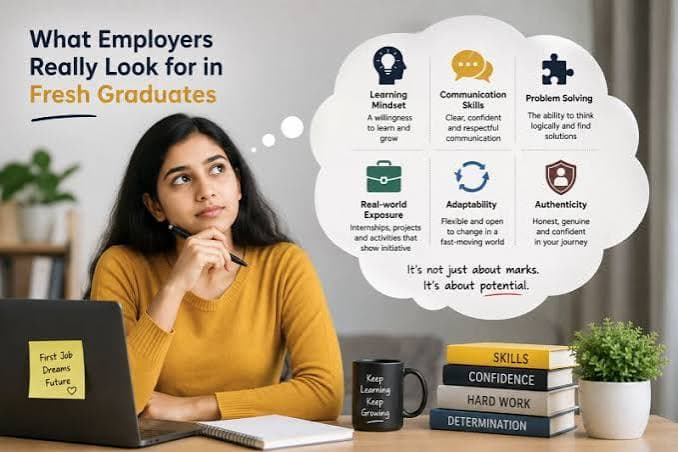
What Students Should Learn
Students preparing for this employment landscape should think in terms of skill combinations rather than single technologies.
A strong foundation could include:
Domain knowledge
AI and digital literacy
Data and analytical thinking
Problem-solving
Communication
Creativity
Collaboration
Adaptability
Ethical and responsible technology use
Continuous learning
The goal is not to predict exactly which job will be popular in 2030. It is to develop the ability to move between opportunities as the market changes.
The AI Job Market Has a Warning Too
The growth of AI-related careers should not create the impression that every AI-adjacent qualification will automatically lead to employment.
AI is also putting pressure on traditional entry-level roles. Recent reporting on India's technology sector shows that routine IT work is already being disrupted as companies adopt AI and rethink traditional outsourcing models.
This makes the quality of skills more important than the popularity of a course.
A student completing an "AI certification" may still struggle without strong fundamentals. Conversely, a graduate with solid technical or domain knowledge who can use AI effectively may be better positioned.
The emerging career landscape should be viewed as a story of transformation rather than replacement.
Some occupations will shrink. Others will expand. Many existing jobs will change without disappearing completely.
The more useful question for students is therefore not "Which jobs will AI create?" but:
"Which capabilities will allow me to remain valuable as AI changes my profession?"
That shift in thinking can influence how students choose courses, how institutions design curricula and how parents evaluate educational pathways.
Schools and colleges should expose students to emerging technologies while strengthening foundational knowledge. Universities should build stronger connections with industry. Employers should communicate the capabilities they actually need. And students should build evidence of what they can do rather than simply collecting credentials.
The Road Ahead
India's AI-era employment market is likely to reward people who can combine technical fluency with human judgement.
AI specialists and GenAI engineers will be important. So will cybersecurity professionals, data specialists, cloud engineers and AI product leaders. But opportunities will also emerge in healthcare, sustainability, creative industries, consulting, HR and other fields where AI becomes a tool rather than the profession itself.
The future of work will therefore not belong exclusively to people who build AI.
It will increasingly belong to people who understand how to work with AI, where to apply it, when to question it and how to combine it with expertise that machines cannot easily replicate.
For students making career choices today, that may be the most future-ready strategy of all.
Fact-Check Sources
LinkedIn News India, Jobs on the Rise 2026
LinkedIn News India, Grads' Guide 2026
Recent reporting on India's AI hiring trends and Quess data
IBM, Cost of a Data Breach Report 2026 — India findings