India’s Higher Education System at a Turning Point

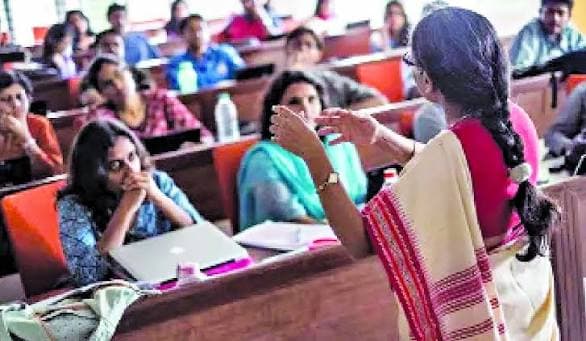
India’s higher education sector is entering a phase of significant expansion and transformation. Universities are growing in number, Indian institutions are becoming more visible in global rankings, and policy reforms are reshaping how higher education is expected to function. At the same time, students and families are becoming more discerning about what a university can offer beyond a degree.
The question, therefore, is no longer simply how large India’s higher education system has become. It is whether this expanding system is delivering stronger learning, better research, improved employability and wider opportunities for students.
The numbers indicate the scale of the transformation. Current UGC public data lists 57 Central Universities, 521 State Universities, 157 Deemed-to-be Universities and 558 Private Universities. India’s presence in global rankings has also expanded considerably. The QS World University Rankings 2027 include 52 Indian institutions, compared with 11 in 2015. Together, these developments point towards a higher education system that is becoming both larger and more internationally visible.
Expansion Is Only the Beginning
Growth in the number of universities is an important indicator, but numbers alone cannot explain the quality or impact of higher education.
India’s institutions operate under very different circumstances. A large metropolitan university may have access to advanced laboratories, international collaborations, experienced faculty and substantial research funding, while institutions in other regions may work with very different resources and student needs.
This diversity makes a one-size-fits-all approach difficult. The success of higher education reforms will depend on how effectively policies are translated into institutional practices and how consistently those practices improve outcomes for students.
The real measure of progress is therefore not simply how many institutions India has, but what those institutions enable students and faculty to achieve.
A New Choice for Students
For students, the expanding higher education landscape offers more choices than ever before. New universities, specialised programmes, international collaborations and technology-enabled learning models are creating additional pathways into higher education.
But more choice also creates a greater need for informed decision-making.
A university's ranking may provide one point of comparison, but students should look further. What is the quality of the faculty? Does the curriculum reflect current industry and academic requirements? What opportunities exist for internships, research and practical learning? What are the institution's placement outcomes? Are international partnerships producing meaningful opportunities or simply appearing in promotional material?
The strongest choice is not necessarily the institution with the most impressive list of features. It is the institution that aligns its academic resources and opportunities with the student's ambitions.
Parents Are Looking Beyond the Brochure
The same shift is affecting parents.
Higher education represents a substantial financial and personal investment, making it important for families to evaluate institutions on evidence rather than presentation alone. Rankings, modern infrastructure, foreign collaborations and technology-enabled classrooms can be useful indicators, but none should be treated as an automatic guarantee of educational quality.
Parents should examine accreditation, programme structure, faculty expertise, student outcomes, placement records, fees and available support systems. Most importantly, they should consider whether the institution is suited to the student's interests, abilities and long-term plans.
Faculty Will Determine the Success of Reform
No higher education reform can succeed without faculty participation.
Universities may introduce new curricula, digital platforms, artificial intelligence or international partnerships, but educators remain responsible for translating these developments into meaningful learning experiences. Faculty members provide academic judgement, mentorship, research guidance and the context students need to make sense of rapidly changing information.
This makes faculty development a strategic priority. Institutions that invest in professional development, interdisciplinary teaching and research capacity are better positioned to respond to changes in both education and the labour market.
From Degrees to Capabilities
One of the biggest pressures facing higher education is the changing relationship between qualifications and employability.
A university degree remains important, but employers are increasingly interested in what graduates can actually do. Communication, analytical thinking, digital fluency, problem-solving, teamwork and the ability to learn continuously are becoming increasingly important alongside subject knowledge.
This places greater responsibility on institutions to connect academic learning with practical experience. Internships, industry projects, research opportunities, entrepreneurship initiatives and experiential learning can help students understand how knowledge translates into professional environments.
The question for universities is no longer simply whether students graduate. It is whether graduates leave with capabilities that remain valuable beyond graduation.
Technology Should Serve Education
Digital transformation is another major feature of India's higher education landscape. AI, online learning platforms, data analytics and digital administration are changing how universities operate.
However, technology itself should not be mistaken for innovation.
The relevant question is whether a technology improves learning, expands access, reduces administrative barriers, strengthens research or creates better student outcomes. An institution does not become future-ready simply by adopting the latest platform.
Technology is most valuable when it addresses a clearly defined problem and is supported by trained faculty, appropriate infrastructure and responsible governance.
Access and Equity Remain Central
Expansion also raises an important question: Who benefits from India's higher education growth?
Students across the country do not begin with the same access to quality schooling, digital infrastructure, financial resources, English-language learning or career guidance. Geographic and socioeconomic differences can influence which institutions students can access and which opportunities they can take advantage of.
As the system expands, affordability, accessibility and inclusion must therefore remain central to higher education policy.
A stronger system is not simply one that produces more institutions. It is one that enables a broader range of students to access meaningful educational opportunities.
Global Recognition and Its Limits
India's growing representation in global rankings is encouraging. The increase from 11 Indian institutions in the QS rankings in 2015 to 52 in the 2027 edition reflects greater international visibility.
Yet rankings should be interpreted carefully.
Different rankings measure different combinations of factors, including academic reputation, research, citations, internationalisation and employer perception. A rise in ranking can indicate progress in specific areas, but it does not necessarily capture every aspect of a student's educational experience.
For prospective students and families, rankings are best used as one source of evidence among several, rather than as the final measure of institutional quality.
The Policy-to-Practice Gap
The National Education Policy 2020 provides a broad framework for transforming Indian education through multidisciplinary learning, research, technology integration, internationalisation, flexibility and greater institutional autonomy.
The more difficult task is implementation.
Policy creates direction, but universities must determine how that direction translates into curriculum, faculty practices, student services, research and governance. The effectiveness of reform will ultimately depend on what happens inside institutions rather than simply what is stated in policy documents.
This is why institutional-level evidence matters.
What Should Be Measured Next?
The next phase of India's higher education development should place greater emphasis on outcomes.
Instead of asking whether a university has introduced a new programme, stakeholders should ask whether students benefited from it. Instead of counting partnerships, institutions should demonstrate what those partnerships produced in terms of research, student mobility, curriculum development or employment.
Similarly, the presence of AI or digital infrastructure should be accompanied by evidence of its educational value.
This approach moves the conversation from announcements to accountability.
The EduNex Perspective
For EduNex, India's higher education transformation is not simply a story about rankings, new universities or policy announcements. It is a story about how institutions are responding to a changing educational and economic environment.
The next generation of higher education reporting should connect institutional claims with evidence—examining academic programmes, faculty development, research, student opportunities, employability, infrastructure and measurable outcomes.
Through institution profiles, verified education news, expert perspectives and data-led analysis, EduNex can help students, parents and education leaders look beyond headlines and understand what is actually changing across India's campuses.
The Road Ahead
India's higher education system has reached a point where expansion must increasingly be matched by quality, relevance and accountability.
The number of universities matters. Global recognition matters. Policy reform matters. But the ultimate test is whether these developments improve the educational experience and future opportunities of students.
For institutions, that means demonstrating outcomes rather than simply announcing initiatives. For students and parents, it means asking better questions and evaluating evidence. For policymakers and education leaders, it means ensuring that growth is accompanied by quality, access and institutional capacity.
India's higher education story is no longer simply about building a larger system. The next chapter will be about building a system that delivers better learning, stronger research, meaningful opportunity and graduates prepared for a changing world.
Fact-Check Sources
University Grants Commission (UGC) — University Data, 2026
QS World University Rankings 2027
National Education Policy (NEP) 2020