Should Every Student Learn Prompt Engineering?

A few years ago, knowing how to search effectively online was considered a useful digital skill. Today, students can ask an AI system to explain a concept, analyse information, write code, generate ideas or help structure an assignment within seconds.
This has created a new question for schools and colleges: Should prompt engineering become a skill every student is expected to learn?
The answer is more nuanced than a simple yes or no.
Knowing how to communicate effectively with AI can certainly help students get better results from these systems. But prompt engineering, on its own, should not become the definition of AI literacy. The more important educational goal is to help students understand how to frame problems, provide context, question outputs, verify information and use AI responsibly.
In other words, students need to learn not only how to ask AI a better question, but how to decide whether the answer deserves to be trusted.
Prompting Is a Skill, But It Is Not the Whole Skill
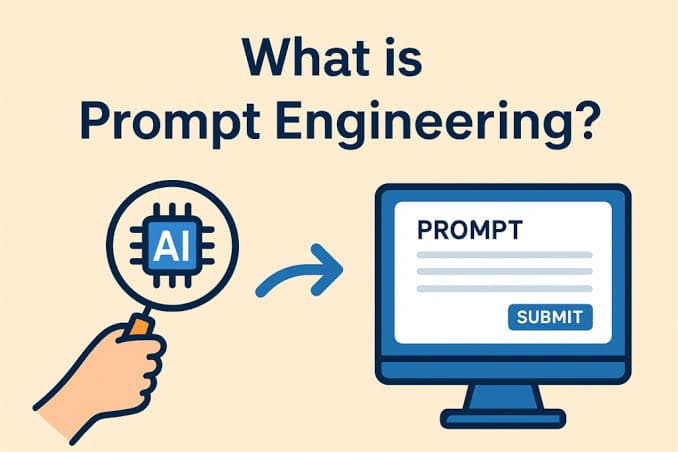
Prompt engineering is often described as the ability to create precise instructions for an AI system. A well-structured prompt can provide context, establish a goal and specify the type of response required.
For students, this can be useful.
A student researching climate change, for example, may receive a more relevant response by explaining the academic level, specifying the topic and asking for evidence-based information rather than simply typing a broad question.
However, better prompting does not automatically produce better learning.
An AI system can generate a confident response that contains inaccurate information. It can misunderstand a question, reproduce bias or present an incomplete argument. A sophisticated prompt cannot eliminate these limitations.
That is why prompting should be treated as one component of a broader AI skill set.
What Students Really Need to Learn
A future-ready approach to AI education should move through several stages.
Students first need to define the problem. Before opening an AI tool, they should understand what they are trying to accomplish.
They then need to provide context. AI systems generally perform better when the user explains the task, audience, constraints and desired outcome.
The next step is evaluation. Students should examine whether the response is accurate, relevant and appropriate.
Then comes verification. Important facts, statistics, quotations and references should be checked against reliable sources.
Finally, students need to exercise judgement. They should understand when AI is appropriate, when human expertise is necessary and when using AI may compromise academic integrity or privacy.
These capabilities are likely to remain useful even as specific AI platforms and prompting techniques change.
From Prompt Writers to Critical AI Users
One risk of focusing too heavily on prompt engineering is that students may begin to see AI as an answer-generation machine.
Education should encourage the opposite mindset.
A student should be able to use AI to generate possible explanations, challenge an argument, brainstorm ideas or identify gaps in understanding. But the student should remain responsible for the final reasoning.
For example, asking AI to solve a mathematical problem may produce an answer. Asking it to explain several approaches and then checking the reasoning can create a much richer learning experience.
The difference is significant.
In the first case, AI replaces part of the student's thinking. In the second, it becomes a tool that supports thinking.
What This Means for Teachers
Teachers will play an important role in determining which of these approaches becomes normal in classrooms.
Rather than simply banning AI or encouraging unrestricted use, educators can teach students how to work with it critically. Assignments can require students to compare AI-generated responses with credible sources, identify errors, improve machine-generated drafts or explain why they accepted or rejected an AI recommendation.
This also changes assessment.
If an assignment can be completed entirely by generating a response through AI, educators may need to place greater emphasis on discussions, demonstrations, projects, reflective work and the ability to explain one's reasoning.
Teacher professional development will therefore be essential. Educators need to understand AI tools well enough to identify both their educational possibilities and their limitations.
What Parents Should Consider
Parents may encounter schools and coaching providers increasingly promoting AI courses, prompt engineering workshops and "future-ready" programmes.
The important question is what students actually learn.
A short course teaching students how to write prompts may be useful, but parents should look for programmes that also address information verification, responsible AI use, privacy, ethics, critical thinking and academic integrity.
The objective should not be to make children experts in a particular AI platform. Platforms will change.
The objective should be to help students develop transferable AI literacy that remains useful as the technology evolves.
AI Literacy Is Broader Than ChatGPT
The conversation is also larger than any one application.
Students may encounter different AI systems for writing, coding, research, design, translation, data analysis and productivity. The interface will vary, but the underlying principles remain similar.
Can the student formulate a clear objective?
Can they provide appropriate context?
Can they recognise an unreliable answer?
Can they verify information?
Can they protect sensitive data?
Can they identify ethical concerns?
Can they explain how AI contributed to their work?
These questions are more important than whether a student knows a particular collection of prompting formulas.
The Academic Integrity Question
AI also creates new challenges for academic integrity.
If students use AI to generate essays, complete assignments or solve problems without understanding the work, the technology can undermine the learning process it is supposed to support.
This does not necessarily mean AI should be excluded from education. Instead, schools and universities need clear expectations about acceptable and unacceptable use.
Students should understand when AI assistance needs to be disclosed, what information should never be entered into an AI system and why submitting machine-generated work as entirely their own can be academically problematic.
Responsible use needs to become part of AI literacy.
Equity Matters Too
There is another consideration for Indian education: access.
Not every student has the same access to high-quality devices, reliable connectivity, paid AI platforms or guidance from trained teachers. If AI becomes an important part of education, unequal access could create another layer of educational disadvantage.
Schools therefore need to consider whether AI-based learning opportunities are genuinely accessible to all students.
The goal should be to reduce—not deepen—the digital divide.
Will Prompt Engineering Matter in the Job Market?
Prompting is already useful in several professional contexts, particularly where employees interact regularly with generative AI tools.
However, it is unlikely that prompt writing alone will remain a sufficient career skill.
As AI systems become easier to use, the value may increasingly shift towards people who understand the underlying business or academic problem and can use AI effectively within that context.
A marketing professional who understands customers, strategy and analytics will likely derive more value from AI than someone who only knows how to construct elaborate prompts.
The same principle applies to students.
Domain knowledge plus AI fluency is likely to be more valuable than prompting ability alone.
What Schools Should Aim For
Instead of creating "prompt engineering" as an isolated skill, schools could introduce it within a broader AI literacy framework.
Students can learn prompting while simultaneously developing:
Critical thinking
Research and source verification
Digital literacy
Data awareness
Problem-solving
Creativity
Communication
Privacy and cybersecurity awareness
Ethics and responsible technology use
Independent judgement
This approach makes AI part of education without allowing it to dominate education.
The debate around prompt engineering reflects a larger question about what schools should teach when technology changes faster than curricula.
For EduNex, the answer should not be determined by the popularity of a particular AI tool or the marketing appeal of a new course. The focus should remain on whether students are developing capabilities that will remain valuable as technology evolves.
Prompting is useful. AI fluency is important. But the deeper goal is AI literacy with human judgement.
The student who can ask an AI system an impressive question is demonstrating one skill.
The student who can identify the right problem, use AI appropriately, challenge its response, verify the evidence and make an informed decision is demonstrating something far more valuable.
The Bottom Line
Should every student learn prompt engineering?
Yes—but not as an end in itself.
Students should learn how to communicate effectively with AI, but that skill should sit within a much broader understanding of technology, critical thinking, ethics and independent learning.
The technology will continue to change. The prompts that work today may become irrelevant tomorrow. What will remain valuable is the ability to ask meaningful questions, evaluate answers, understand context and make responsible decisions.
That is the kind of AI literacy education should be preparing students for.
Fact-Check Sources
2026 research on responsible AI literacy
2026 research on AI-assisted curriculum design