The 10 Future Skills Indian Students Need by 2030

A degree can open a door, but skills determine how far a student can go once that door opens.
India's education system is entering a period in which academic qualifications alone may no longer be enough to guarantee workplace readiness. As artificial intelligence reshapes jobs, employers rethink hiring and project-based work becomes more common, students are being asked to demonstrate what they can actually do—not simply what they have studied.
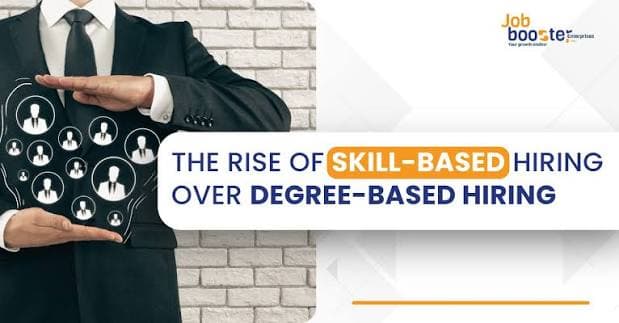
The India Skills Report 2026 places graduate employability at approximately 56.35%, pointing to a continuing gap between academic qualifications and the capabilities employers expect. At the same time, the growing emphasis on project-based hiring suggests that organisations are increasingly interested in demonstrable skills, adaptability and the ability to contribute to specific assignments.
For students preparing for 2030 and beyond, the question is therefore changing from "What degree should I pursue?" to "What capabilities will help me remain valuable as work changes?"
Here are ten skills that are likely to become increasingly important.
1. Critical Thinking
Information is becoming easier to access, but determining what is useful, accurate and relevant is becoming harder.
Students will need to question assumptions, examine evidence, identify weak arguments and make decisions based on reason rather than simply accepting information at face value. This becomes particularly important in an environment where AI can generate answers within seconds.
Critical thinking is therefore not about knowing more information. It is about knowing what to believe, what to question and why.
2. AI and Digital Fluency
AI is becoming part of everyday work across sectors, from finance and marketing to healthcare, education and technology.
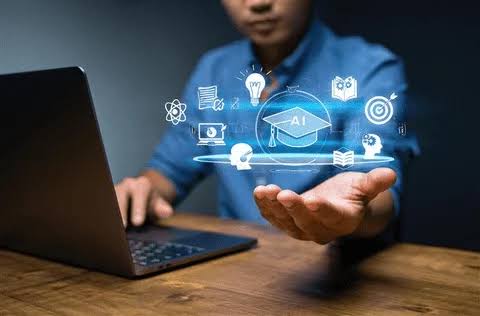
Students do not necessarily need to become AI specialists, but they should understand how AI-powered tools work, where they can be useful and where human judgement remains essential. Digital fluency should include responsible use of AI, data awareness, basic technological understanding and the ability to adapt to new platforms.
The most valuable skill may not be knowing one particular AI tool. It may be the ability to learn and adapt whenever the next tool arrives.
3. Communication
Strong communication remains one of the most transferable professional skills.
Students entering the workforce will need to communicate ideas clearly through presentations, emails, reports, conversations and digital platforms. As workplaces become increasingly distributed and technology-enabled, the ability to explain a complex idea simply can become a significant advantage.
Good communication is not merely about language proficiency. It is about understanding the audience, organising information and making an idea understood.
4. Problem-Solving
Employers rarely hire people simply to identify problems. They hire people who can help solve them.
Students should therefore have opportunities to work on real-world challenges, case studies, projects and practical assignments. These experiences develop the ability to analyse a situation, identify possible solutions, assess risks and make informed decisions.
Problem-solving also encourages students to become comfortable with uncertainty—an increasingly important quality in rapidly changing workplaces.
5. Adaptability and Continuous Learning
The skills that are valuable today may look very different by 2030.
Students entering higher education now could eventually work in roles that are still evolving or did not exist when they began their education. The ability to learn, unlearn and relearn will therefore become increasingly important.
Adaptability does not mean constantly changing direction. It means being prepared to acquire new knowledge when circumstances change.
6. Creativity and Innovation
As technology automates more routine tasks, human creativity can become increasingly valuable.
Creative thinking enables students to approach familiar problems differently, develop new ideas and identify opportunities where others may see limitations. Innovation can appear in technology, business, design, research, social initiatives and even everyday problem-solving.
Educational institutions can encourage this capability by giving students room to experiment, question existing approaches and learn from failure.
7. Collaboration and Teamwork
Modern workplaces increasingly operate through multidisciplinary teams. A technology professional may work with designers, marketers, researchers and business leaders, while a healthcare professional may collaborate with technology and data specialists.
Students therefore need to learn how to listen, negotiate, share responsibility, manage disagreements and contribute towards a common objective.
Academic success is often measured individually. Professional success, however, frequently depends on how effectively people work with others.
8. Emotional Intelligence
Technical competence can help a person secure an opportunity, but interpersonal skills often determine how effectively they operate within an organisation.
Emotional intelligence includes self-awareness, empathy, emotional regulation and the ability to understand other people's perspectives. These qualities become particularly important in leadership, teamwork, customer-facing roles and situations involving conflict or uncertainty.
As automation increases, distinctly human abilities such as empathy, relationship-building and judgement may become even more valuable.
9. Data and Analytical Thinking
Data is increasingly influencing decisions across almost every industry.
Students do not all need to become data scientists, but they should be comfortable interpreting basic data, recognising patterns, asking analytical questions and using evidence to support decisions.
Data literacy can help students move beyond assumptions and develop a more structured approach to solving problems.
10. Career and Professional Readiness
Students also need to understand how to translate their education into professional value.
This means developing practical portfolios, participating in internships and projects, understanding workplace expectations and learning how to present their capabilities to potential employers. With project-based hiring gaining attention, evidence of what a candidate has actually created, contributed to or solved can become increasingly significant.
A qualification tells an employer what a student studied. A portfolio, project or practical experience can demonstrate what the student can do.
The Bigger Question for Indian Education
Preparing students for 2030 cannot be reduced to adding another list of skills to the curriculum.
The larger challenge is to create an education system where students can practise these capabilities throughout their learning journey. A classroom that focuses exclusively on memorisation may struggle to develop creativity, collaboration and problem-solving. Similarly, an institution may offer advanced technology but still produce limited outcomes if students have few opportunities to apply what they learn.
This is where institutions have an important role to play.
Curriculum design, faculty development, internships, industry partnerships, experiential learning and assessment methods will all influence whether students graduate with practical capabilities or simply another qualification.
What Parents Should Look For
For parents, the future-skills conversation offers a useful way to evaluate educational choices.
Instead of focusing only on rankings, infrastructure or the number of courses available, families can ask whether an institution gives students opportunities to work on projects, communicate ideas, collaborate with peers, interact with industry and develop technology and problem-solving skills.
The objective should not be to find an institution that promises to prepare a child for every possible future. No institution can predict the future with certainty.
The better choice is an institution that teaches students how to prepare for change.
What Students Can Do Today
Students do not need to wait until graduation to develop future-ready capabilities.
They can build portfolios through projects, participate in competitions, learn digital tools, undertake internships, volunteer for team activities, practise public speaking and explore subjects outside their formal curriculum.
Most importantly, they should avoid treating employability as something that begins in the final year of college.
Career readiness is built gradually through the combination of knowledge, experience, curiosity and continuous learning.
The Institutional Responsibility
For educational institutions, future skills should not become another marketing phrase.
If an institution claims to be preparing students for the future, there should be evidence behind that claim. Are students undertaking meaningful projects? Are faculty members receiving professional development? Are industry partnerships producing internships or real learning opportunities? Are graduates finding employment or pursuing further education successfully?
These questions shift the conversation from promises to outcomes.
The same principle applies to emerging technologies. Introducing AI into a classroom may be innovative, but innovation has limited value if it does not improve understanding, engagement or outcomes.
Looking Towards 2030
The workforce of 2030 will almost certainly be different from the one students entering college today imagine.
Some jobs will evolve, some tasks will be automated and new roles will emerge. But the need for people who can think critically, communicate clearly, solve unfamiliar problems, work with others and continue learning is unlikely to disappear.
For Indian students, future readiness therefore should not be about predicting one perfect career path. It should be about developing a strong foundation that remains useful even when the nature of work changes.
At EduNex, this distinction is central to how the education landscape should be understood. Beyond announcements, rankings and institutional claims, the more important story is what students are actually gaining from their educational experience—and whether those capabilities translate into meaningful opportunities.
By 2030, the strongest advantage may not belong to students who have collected the most certificates. It may belong to those who have learned how to think, adapt, create, collaborate and keep learning.
Sources
India Skills Report 2026
TeamLease EdTech Career Outlook, HY2 2026