UGC Directs Colleges to Integrate SWAYAM Courses in 2026
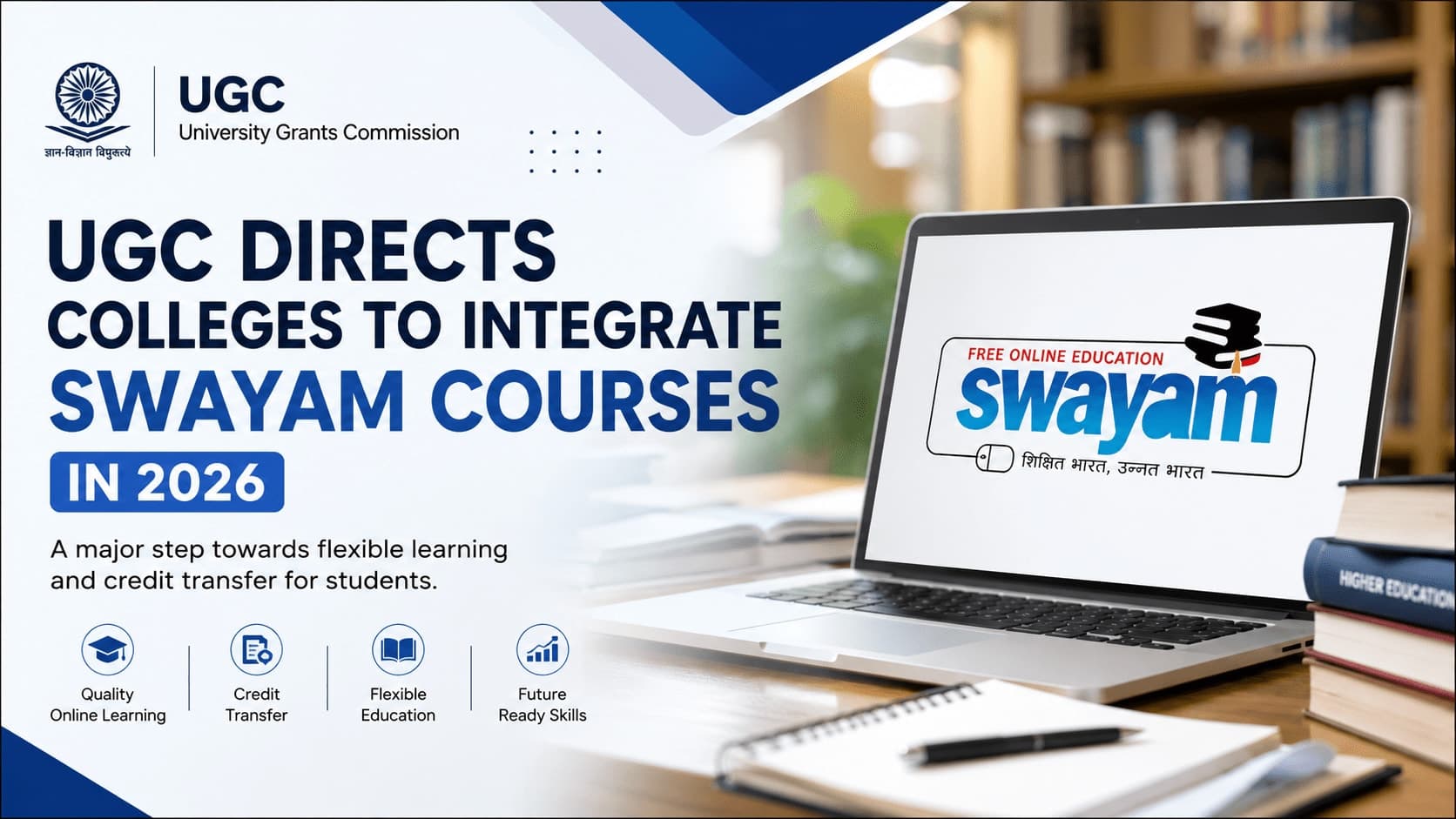
UGC Directs Colleges and Universities to Integrate SWAYAM Courses for 2026 Semester
The University Grants Commission (UGC) has directed higher education institutions (HEIs) to integrate SWAYAM online courses into their academic programmes for the July 2026 semester. The move is aimed at expanding students’ access to quality online learning while making it possible for eligible courses to contribute towards academic credits.
The latest direction is significant for students across Indian colleges and universities because it strengthens the role of online and blended learning within mainstream higher education. Instead of treating online courses as completely separate from regular degree programmes, institutions are being encouraged to identify relevant SWAYAM courses and establish mechanisms for credit transfer.
What Is SWAYAM?
SWAYAM, short for Study Webs of Active Learning for Young Aspiring Minds, is India's national online learning platform. It provides courses across different academic and professional disciplines, allowing learners to access educational content from institutions and educators through an online platform.
The platform has become an important part of India's broader push towards digital education and flexible learning. Its integration with higher education institutions can give students opportunities to study subjects that may not be available as regular electives at their own colleges.
What Has UGC Asked Colleges to Do?
According to the latest direction, higher educational institutions are expected to identify SWAYAM courses that are relevant to their programmes and establish appropriate mechanisms for students to receive academic credit where applicable. Institutions also need to communicate the available courses and registration process to students.
This means colleges and universities will have an important role in connecting SWAYAM learning with their existing academic structures.
For students, the practical benefit is straightforward: an approved online course could potentially become part of their academic learning pathway rather than being just an additional certificate to add to a résumé.
How Will SWAYAM Credit Transfer Help Students?
One of the biggest advantages is greater flexibility in learning.
Students may be able to explore subjects outside their core curriculum and develop additional knowledge without being restricted entirely to courses offered within their own institution.
For example, a commerce student could explore data analytics, a computer science student could study management or entrepreneurship, and a humanities student could take courses related to technology or digital skills.
This approach also supports the broader objectives of the National Education Policy (NEP) 2020, which promotes multidisciplinary education, flexibility and the use of technology in learning.
The UGC has already been working on frameworks such as the National Credit Framework and other initiatives designed to make higher education more flexible and integrated.
What Students Should Check Before Enrolling
Students should not assume that every SWAYAM course automatically counts towards their degree.
Before registering, students should check whether:
Their college or university has approved the course.
The course is mapped to their academic programme.
The institution permits credit transfer for that course.
There are specific examination or assessment requirements.
The credits can actually be included in their academic record.
The safest approach is to follow the instructions issued by the student's university or college rather than relying only on information displayed on the online course platform.
Why This Matters for Indian Higher Education
The latest UGC direction reflects a larger shift taking place across India's education system.
Higher education is gradually moving beyond the traditional model where students learn only inside classrooms and follow a fixed set of subjects. Online courses, digital resources, multidisciplinary programmes and flexible credit structures are becoming increasingly important.
For colleges, this also creates an opportunity to expand the range of learning experiences available to students without having to create every course internally.
However, implementation will be the real test.
Simply allowing students to register for online courses is not enough. Colleges need clear credit-transfer policies, academic counselling, transparent course mapping and proper communication. Without these systems, students could end up completing courses without knowing whether the credits will actually contribute to their degree.
What Students Can Expect Next
As the July 2026 semester progresses, students should watch for announcements from their universities and colleges regarding approved SWAYAM courses, registration deadlines and credit-transfer procedures.
The initiative could be particularly valuable for students who want to build skills beyond their regular curriculum while still keeping their learning connected to their formal education.
For institutions, successful implementation could also encourage a more flexible approach to curriculum design and student learning.
Final Thoughts
The UGC's latest push to integrate SWAYAM courses into higher education is another important step in India's transition towards flexible and technology-enabled education.
For students, the opportunity is more than simply earning another online certificate. When properly integrated with a degree programme, online learning can help students explore new subjects, develop additional skills and build a broader academic profile.
The key, however, is to verify credit eligibility with the respective college or university before enrolling.
As India's higher education system continues to evolve under the NEP framework, initiatives like SWAYAM could become an increasingly important part of how students learn, earn credits and prepare for the changing job market.
Related Articles
UGC NET Results 2026 for 84 Subjects to Be Announced This Week
UGC NET Results 2026 for 84 subjects are expected this week as NTA prepares final answer keys, while three subjects face September re-exams.
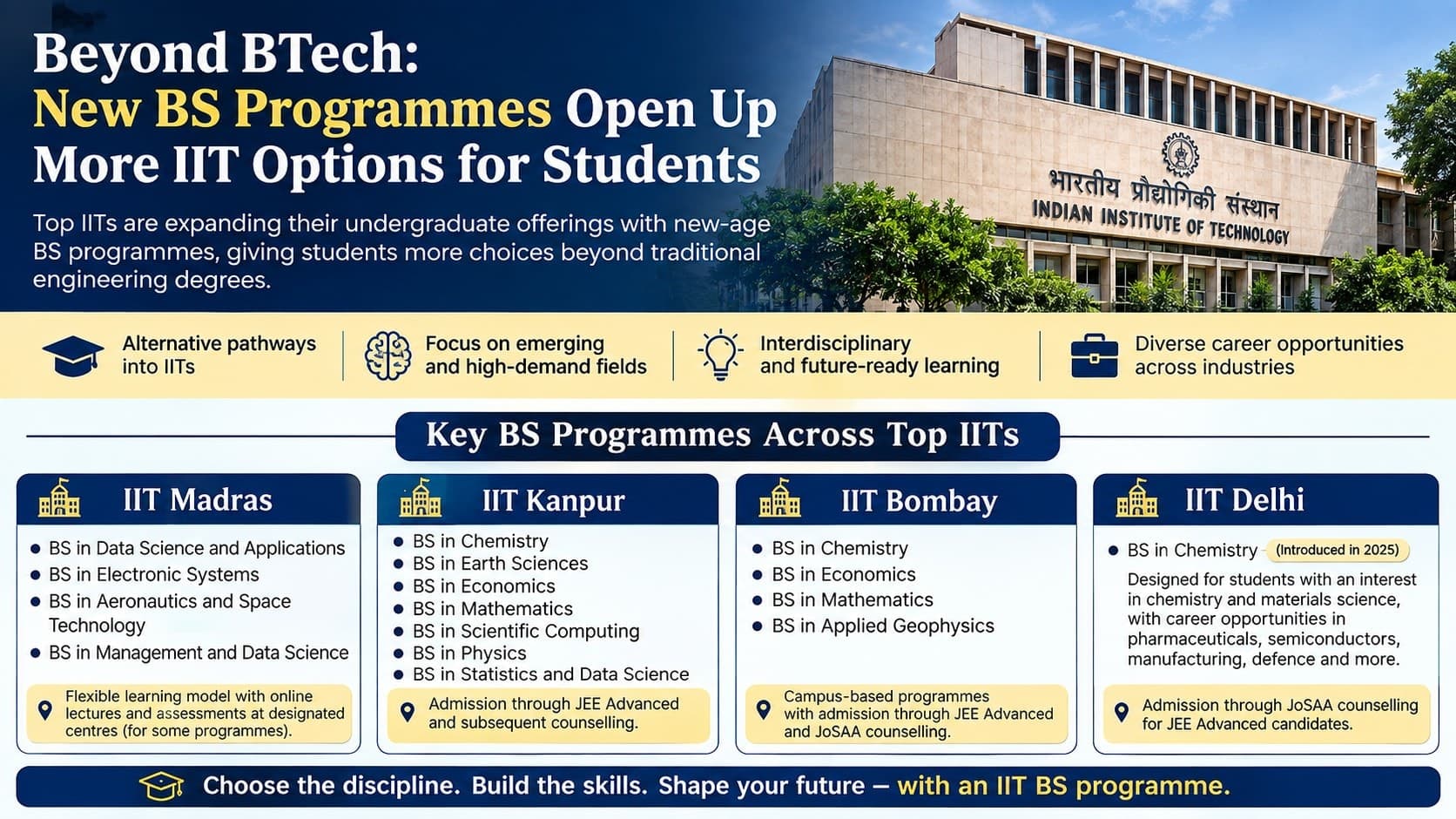
IITs Expand Undergraduate Options with New-Age BS Programmes for Future Careers
India’s premier engineering institutions are broadening their undergraduate offerings beyond traditional BTech degrees, with several Indian Institutes of Technology (IITs) introducing or expanding Bachelor of Science (BS) programmes in emerging fields.

Why AI Literacy Is Becoming Essential for Every Student
Artificial intelligence is moving from the margins of education into its mainstream. What was once primarily a conversation about technology and automation is now becoming a question of curriculum, pedagogy, employability and educational equity.